Showing posts with label music. Show all posts

Monday, September 12, 2011

Louis Armstrong House Museum

Louis Armstrong on stage
7/10/2011
MuseumsLouis Armstrong House Museum (1 hour) ……….………… $10

As part of our crazy mission, Paul and I have seen 25 historic buildings during the last year and a half, giving us a kind of unique expertise on the subject, and while our opinions differ on specific buildings, we are unanimous on what makes a historic house successful: its all about the tour

Take the Old Stone House in Brooklyn: it had a centerstage role in the bloody Battle for Brooklyn and an amusing later role as the club house of the beloved Brooklyn Dodgers, but all was conveyed by dated dioramas and raged posterboards.  The experience failed to engage and we left after 15 minutes.  Contrast this with the Van Courtland House, with a minor Revolutionary War role and staid history as a country house for a wealthy but faded Bronx family, but the docent gave a gripping and detailed lecture on everything from George Washington’s clever use of war time expenditures to the horrors of 18th century toilets.  It had us fascinated for 3 hours and a pair of jaded Bronx high school students peppering him with questions until the museum closed.  Clearly, the tour makes or breaks the historic house experience.

Louis Armstrong House Museum
Today we discovered our favorite historic house to date, which, not coincidentally, also had one of the best tours.  The house is the Louis Armstrong House Museum and was the home of famous jazz musician Louis Armstrong and his wife Lucille from 1943 until his death in 1971.  The house is an unassuming two-floor townhouse in the working class neighborhood of Corona, Queens, and at first glance it doesn’t seem much like the home of a superstar like Armstrong, who was one of the greatest musicians of his age and quite a celebrity.  However, the plainness of the house and neighborhood is actually what Armstrong (and we) loved about the place. 

Louis Armstrong's "Hello Dolly" Gold Record Award, 1964
Early in the tour, the docent tells a story of how Armstrong’s wife Lucille once tried to buy a townhouse in the swank Upper West Side neighborhood in Manhattan.  At the time America was still racially divided, but in this case race wasn’t the Armstrongs’ problem.  Louis was so famous that when he stepped out of the car to see the townhouse, he was immediately mobbed by fans and autograph seekers.  Here in Corona, Lucille’s family was well established and everyone knew Louis as her husband, and he was left alone.  This was the one place in the world where the great Louis Armstrong could take a break from his grueling schedule of 300 concerts a year and just go to the barber on the corner like a normal guy and play his trumpet on the front porch for the neighborhood kids.  Knowing that Lucille would have preferred a Manhattan brownstone, Armstrong bricked the front of their house to look like one, and offered free brickwork to anyone on the block to make their neighborhood resemble Manhattan just a bit (only one household took him up on it).  This was a house where a superstar could get a taste of the quiet life, and he clearly treasured it.

Louis Armstrong writing about his neighborhood in Queens
We know his feelings about the house because Louis was somewhat obsessive about documenting his life, writing two autobiographies, hundreds of pages of handwritten memoirs and most interestingly, leaving hundreds of reel to reel recordings of his daily life.  His beloved reel-to-reel player is still on display in his upstairs den and the best parts of the tour are when the docent reaches over and presses a button in the wall and you hear recordings of Louis hanging out with his wife, teaching his young niece to sing, or talking about how much he loved his den
 
The house is capably managed by the music school at Queens College (the Kupferberg Center for the Arts) and they could have focused the tour on Louis Armstrong’s legendary music (and no one would have blamed them) but instead the tour explores the man behind the legend and you feel like you get to know him personally.  You hear about Louis’s rough upbringing eating out of dumpsters in New Orleans.  When you see his gold plated bathroom the guide includes the embarrassing detail that Louis spent a lot of time in the bathroom due an overuse of laxatives initiated by his mother after dumpster diving.  You hear how he got that scar on his lip, and the sad stories of his three failed marriages until he finally “got it right” with Lucille, who was clearly the love of his life. 

Gold plated bathroom at the Louis Armstrong House
By the end of the tour you’re calling him by his nickname Satchemo and you know what it stands for.  You get comfortable in his homey den, looking at his reading glasses laid on handwritten sheet music and wondering if you could get a nip from the half bottle of whiskey waiting in the cabinet.  You hear him say how much he loved the portrait on the wall, painted by his good friend Tony Bennett.  Then, as the tour is winding down and you feel you know him like that sweet older gentleman on your block, the guide finally plays a song over the house speakers and the sounds of Satchemo’s magnificent trumpet escorts you out.

Trumpet given to Louis Armstrong by King George V in 1933

Kitchen of the Louis Armstrong House
Lucille is brought to life on the tour as well.  Louis met her when she was a dancer at the Cotton Club, and for a while she toured the world with him until she’d had enough of the crazy schedule and bought the house in Queens.  Lucille chose the décor and the home was clearly decorated by a woman who knew what she liked.  You may not love the foil wallpaper on the ceilings or the all-teal kitchen, but you can’t say that she didn’t have strong opinions on style, or probably anything else.

Louis and Lucille Armstrong's garden
The Louis Armstrong House is seen only by guided tour that leaves every hour on the hour.  If you’re very lucky, you’ll get to meet the gracious Selma Heraldo who lives next door.  Selma was Lucille’s best friend and toured with the Armstrongs.  Although the tour interrupted her gardening, Selma greeted us like visiting friends and her stories lent an even more personable air to this engaging historic house.

Pauline: 8 out of 10:  A glimpse into the private life of a superstar amid classic 60’s décor.
Paul: 9 out of 10:  It’s amazing that someone as famous as Louis Armstrong could live a normal life.

Sunday, August 22, 2010

NY Public Library for the Performing Arts / Rose Museum

5/15/2010, Saturday
MUSEUMS:

Rose Museum ……………………………………...…. 20 min

COST:
New York Public Library for the Performing Arts … Free
Rose Museum ………………………..……...………. Free


The New York Public Library (NYPL) is not like other libraries. The first difference you notice is its size. As we’ve come to expect from all things in New York, the library is really big. With 50 million items (20 million of which are books), it’s among the world’s largest libraries, ranking with the Library of Congress, Bibliothèque nationale de France, and the British Library. The second difference is its collection, consisting of more than standard library fare, with outstanding historical and research materials such as Jefferson's copy of the Declaration of Independence, ancient maps from 15th century Florence, and Columbus’s first letters back to Spain describing the new world.

It’s not just the collection that’s large; the NYPL system consists of 87 individual libraries spread out over Manhattan, the Bronx and Staten Island. We’d highly recommend a visit to the “main branch” as a great stop on any NYC tour. It’s an impossible-to-miss landmark Beaux-Arts building on Fifth Avenue (see picture above), with huge lions on either side of the marble columned facade and an upstairs reading room as grand as any European palace. It’s iconic enough to be featured in movies from “Ghostbusters” to “Sex In the City.” However, it’s not a museum, so that’s not where we went today.

In addition to the 81 lending libraries and the Andrew Heiskell Braille and Talking Book Library for the blind, NYPL has 4 non-lending research libraries: the Humanities and Social Sciences Library; the Schomburg Center for Research in Black Culture; the Science, Industry and Business Library; and the New York Public Library for the Performing Arts. This last library is situated in a prime location within Lincoln Center (see picture at right), between the famous Juilliard School and the home of the Metropolitan Opera. It houses one of the worlds most extensive collections of materials on the performing arts, and is particularly known for its non-book materials, such as historic recordings, videotapes, autographed manuscripts, correspondence, sheet music, stage designs, press clippings, programs, posters and photographs.

A few times a year, the librarians at the New York Public Library for the Performing Arts pull a few things out of the collection and exhibit them in a small space set aside from the library stacks. We’re still not sure if it’s technically a museum, but due to the fact that most of the collection is in media format (not books), it certainly makes for some entertaining exhibits. Just finishing up now is an expose on W. C. Fields (“The Peregrinations & Pettifoggery of W. C. Fields”), featuring his comic radio broadcasts, diagrams of his famous juggling and billiards acts, numerous photos and lots of film clips. While we were visiting, the exhibit was The Jazz Loft Project,” about a more mysterious and haunting subject.

In 1957, celebrated photographer W. Eugene Smith quit his job at Life magazine, moved out of the home he shared with his wife and four children in a charming village in Westchester County, and into a dilapidated five-story loft building at 821 Sixth Avenue in New York City’s wholesale flower district. He wired the space for sound and furnished it with pianos and drum sets. For the next 8 years, this loft served as the late night haunt of NYC’s jazz scene, playing hosts to the biggest names of the age (Charles Mingus, Zoot Sims, Bill Evans, and Thelonious Monk) and countless underground characters. 

Smith obsessively documented events in the loft, taking 740 reel-to-reel tape recordings (approx. 4000 hours) and nearly 40,000 photographs, but always setting himself apart. Paul felt he was the muse of the beat generation, bearing witness to the rise of New York jazz, and perhaps forming the catalyst for what elevated the scene to greatness. Major figures to minor players, all did their time in the loft and are captured forever on his tapes.


Yet the “Jazz Loft Project” isn’t about the obsession of one man, but two. Sam Stephenson of the Duke Center for Documentary Studies spent 13 years transcribing these tapes (to the tune of half a million dollars) and researching the events of the loft. His curation of the tapes and photographs made the exhibit possible. 

Walking into the gallery set the mood. The room was dimly light and all around played the haunting strains of jazz, recorded from the loft. The room’s black glass walls held stark black and white photos of late night jam sessions and conversations at dimly lit parties, everyone with a drink in their hand, a cigarette in their mouth and an instrument at the ready. It seemed as if there’s never been an era that captured cool quite like the 50’s. At the end of the room, hidden in a dim nook, was a wall of TV’s and headphones set up to listen to the interviews of the surviving musicians, the NPR broadcast about the project, or the tapes themselves. Both Paul and I found the exhibit to be a fascinating documentation of the merging of madness, obsession and music.

In the same performing arts theme, Paul and I also saw the Rose Museum today, the museum chronicling the history of Carnegie Hall (see picture at left). The Rose Museum is a tiny place, tucked up a narrow stairway in a hard to find corner of the great hall. It exhibits a small collection of brochures and memorabilia from the famous musicians and tenants of the hall. On one wall, a flat screen TV shows a live broadcast of whatever is happening on the main stage. While we were there it played a rehearsal of what appeared to be a Chinese opera/dramatic musical, all done in plain clothes with scripts in hand and the actors stopping frequently to try a scene in different ways. I hadn’t seen a rehearsal since grade school and it was fun to watch, despite the fact that I don’t speak Chinese.

Our favorite parts of the Rose Museum were about the history of this iconic place, including the opening of Carnegie Hall in 1891 with the American debut of Pyotr Ilyich Tchaikovsky. “Tchaikovsky’s opening-night appearance set an auspicious precedent for the array of classical musicians and conductors for whom the Hall would become the essential venue in the United States. Henceforth, a success at Carnegie Hall would be the litmus test of greatness.” We also learned about how the hall was nearly destroyed in 1960 by developers, but saved at the eleventh hour by a cadre of musicians and politicians headed by Isaac Stern. From this story and others, it was clear that many of the musicians who play here develop a deep love of this American icon, and this love has saved Carnegie Hall more than once.

Our take on things: Both the New York Library of the Performing Arts and the Rose Museum delve into the history and culture of performing arts in NYC and both are free, but otherwise they have little resemblance. The New York Library of the Performing Arts features well-researched and atmospheric multi-media exhibits that are well worth the time.  However, definitely check into what’s showing before you go, as subjects vary widely, and you might not find all of them equally fascinating (i.e. past exhibit “The New York Choral Society: The First 50 Years”). The Rose Museum was a much less meaty museum, but this hidden corner of Carnegie Hall might be worth exploring, particularly for lovers of classical music.


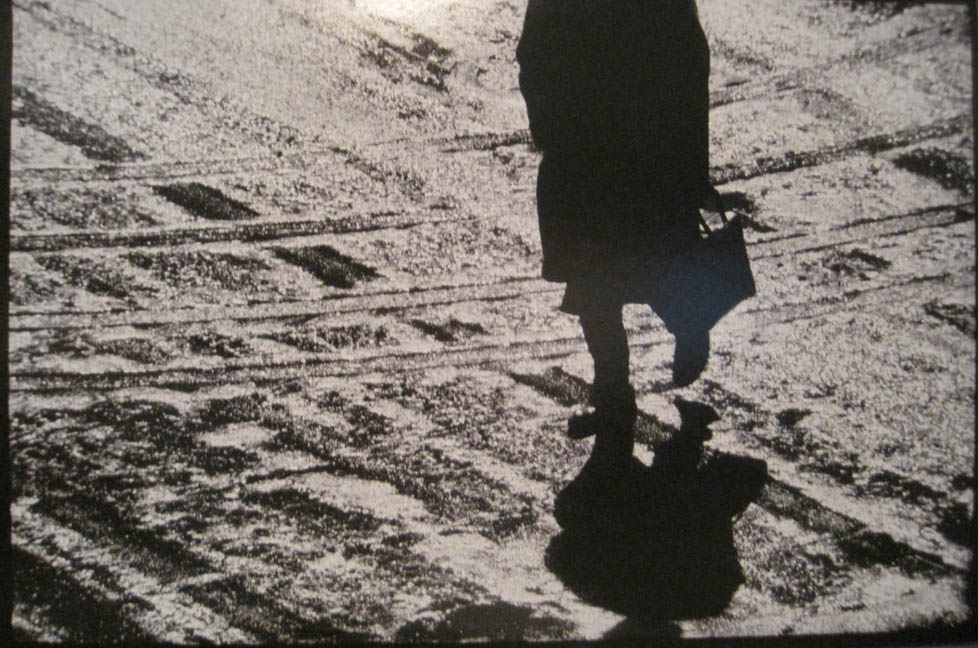
Images in this post, from the top: Arthur Taylor, by W. Eugene Smith from the Jazz Loft Project; the facade of the New York Public Library main branch on 5th Avenue; section of Lincoln Center; four photographs by W. Eugene Smith from the Jazz Loft Project (Vic Dickenson and Pee Wee Russell, Thelonious Monk and Town Hall band, Zoot Sims on saxophone, and David X. Younng's canvases and Jimmey Raney on guitar) exterior of Carnegie Hall; self portrait caricature of the tenor Enrico Caruso from the Rose Museum collection; Isadora Duncan's scarf from the Rose Museum collection; Untitled, by W. Eugene Smith from the Jazz Loft Project.